

Generic Proposal
Here's what we're going to do.
"We will conduct a comprehensive review of your existing processes and systems, followed by the development of a tailored implementation strategy."
Lovely. Could be for literally anyone.
I've been using the same proposal method since 2018, and around 75% of the proposals I send turn into paying clients.
Now I've put the whole thing into a kit so you can use it too.
You get my editable proposal template, the method behind it, worksheets to help you pull the right information out of your sales calls and two real examples showing you how to put it all together.
So the next time someone asks you for a proposal, you're not starting from scratch or sending them a generic document that barely mentions anything they told you.
£197 · Seven resources · Instant access
I've been using this approach in my own business since 2018.
I've won over £200,000 worth of work with it, and around 75% of the proposals I send turn into paying clients.
And no, I don't think that's because I've discovered some magical combination of words that makes people buy things. 😂
I ask a lot of questions on sales calls. I find out what's going wrong, what the person wants to change and why they're considering paying someone to help.
Then I use that information in the proposal.
What have they told me? What am I recommending? Why does that work make sense for their particular situation?
The template helps me put all of that together without starting from a blank page every time.
And that's what you're getting inside the kit.
The actual structure I use, the questions and worksheets behind it, and examples showing you what it looks like when it's finished.
Have you told them why they should care?
Let's say you're proposing a £5,000 project.
Your proposal says you're going to deliver a strategy, three workshops, an implementation plan and ongoing support.
Lovely.
But the person reading it has just spent an hour telling you they're losing customers, their team keeps doing the same work twice and they've got absolutely no idea which part of the business is making money.
They don't particularly want three workshops.
They want those problems sorted.
And yes, the workshops might be exactly how you're going to sort them. But you've got to make that connection for them.
Otherwise they're looking at £5,000 worth of deliverables and trying to work out whether they really need all of it.
The work hasn't changed. The way you're explaining it needs to.
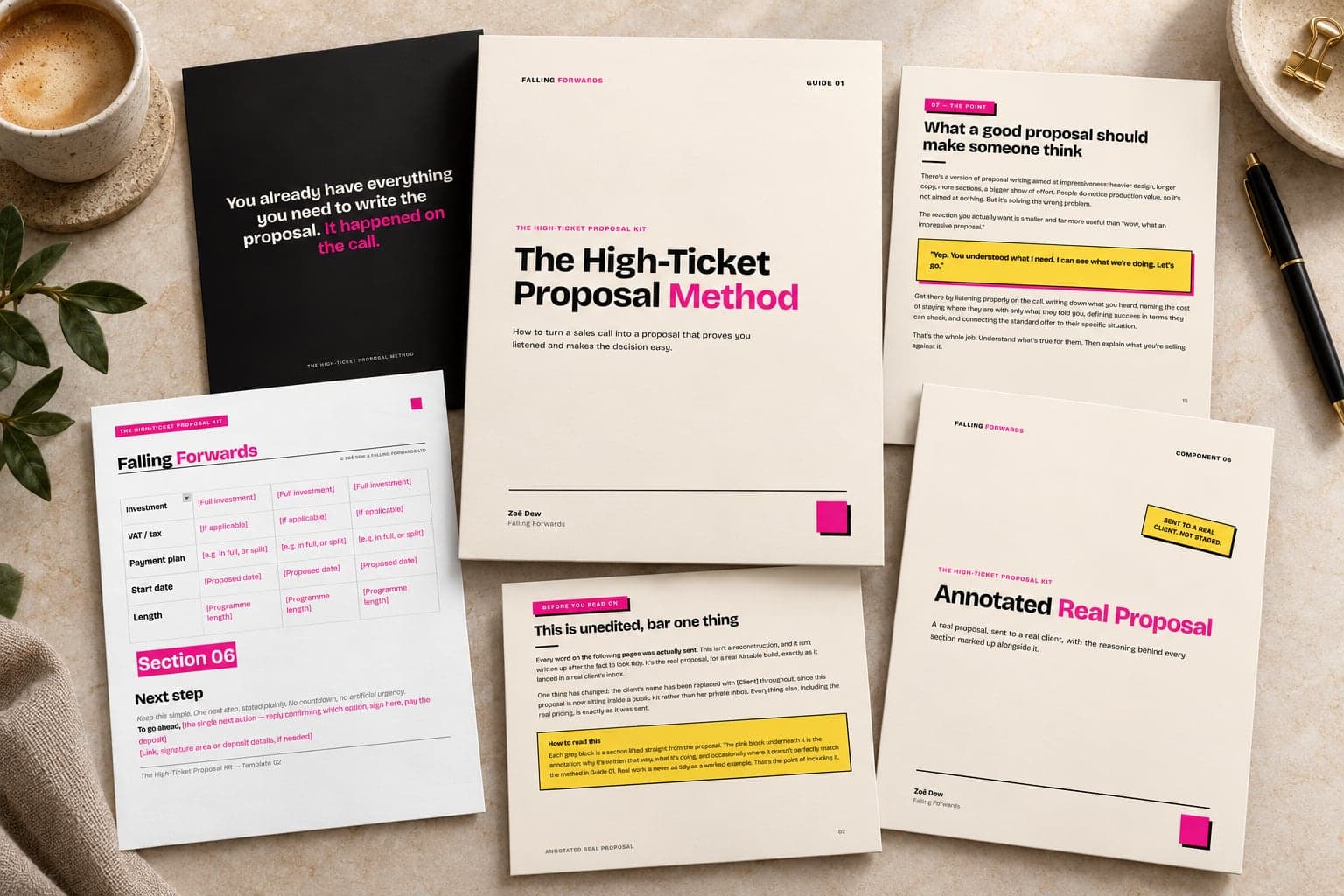
It's a seven-part kit that takes you from the sales conversation to the finished proposal.
You'll have a way to capture the important information, work out what actually matters to the buyer, put your recommendation into a proper proposal and check the whole thing before you send it. And you can stop opening the same old template and hoping that changing the client's name and adding a paragraph about their business is enough.
The bit you read first.
A short guide to taking what someone tells you on a sales call and turning it into a proposal that makes sense to them. What information matters? What needs to go in the proposal? How do you explain the recommendation without filling it with generic sales waffle? Start here.
FORMAT: PDF GUIDE
Because nobody wants to start from a blank page every time.
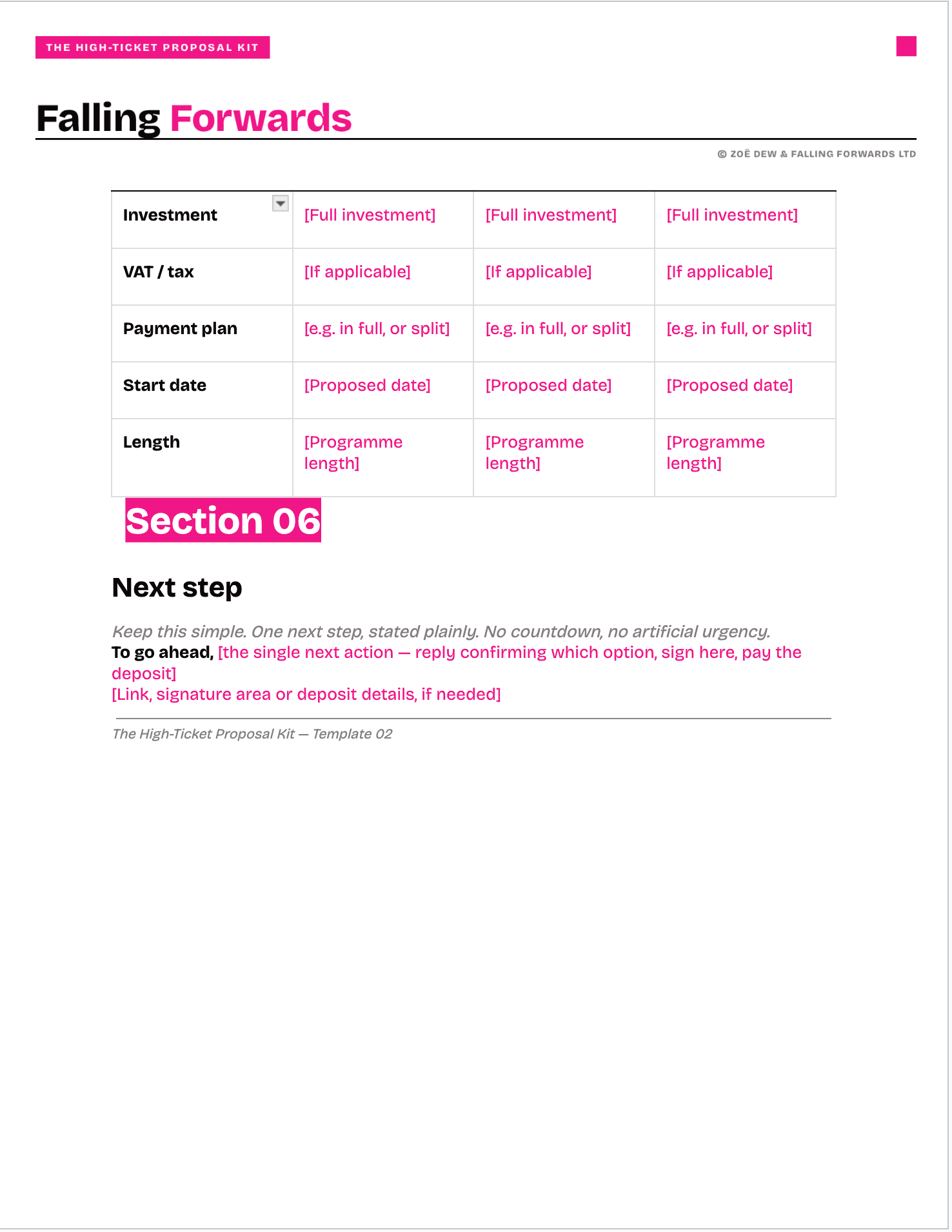
The actual proposal template. Use it to put together a proposal based on the buyer's situation, what you're recommending and why that work makes sense. You've still got to think about what you're writing. It isn't going to magically know what happened on your sales call. But the structure is there, so you're not spending ages deciding what goes where.
FORMAT: EDITABLE TEMPLATE
Write down the stuff that will actually help you sell the work.
What are they trying to achieve? What's getting in the way? What have they already tried? Why are they looking for help now? A one-page sheet to help you capture the information you'll need when it's time to write the proposal. Because three days later, when you're trying to remember exactly what they said about their current situation, you'll be quite pleased you wrote it down.
FORMAT: ONE-PAGE WORKSHEET
What happens if they don't do anything?
Sometimes that's the question that hasn't been properly answered. They know something isn't working. They've told you they want it fixed. But what is the problem actually costing them? Money? Time? Customers? Opportunities? This worksheet helps you explore that properly, rather than making vague claims about how much better everything could be.
FORMAT: WORKSHEET
Same work. Two very different ways of selling it.
One version is generic. The other actually uses the information the buyer gave you. You can see exactly what's been changed, what information has been added and how the proposal becomes much more relevant to the person reading it. This is probably the quickest way to understand what I'm talking about.
FORMAT: SIDE-BY-SIDE WORKED EXAMPLE
Want to see how it works in an actual proposal?
Here you go. A real proposal, with notes explaining why particular sections are there, what they're doing and how the information from the sales conversation has been used. So instead of just being told to make your proposals more specific, you can see what that looks like.
FORMAT: ANNOTATED EXAMPLE
One last look before you hit send.
Have you made the buyer's problem clear? Have you explained why you're recommending this particular work? Is the value specific, or are you expecting them to work that bit out? A final checklist to make sure you haven't missed anything important.
FORMAT: CHECKLIST
Generic Proposal
Here's what we're going to do.
"We will conduct a comprehensive review of your existing processes and systems, followed by the development of a tailored implementation strategy."
Lovely. Could be for literally anyone.
SPECIFIC PROPOSAL
Here's what we're going to do about YOUR problem.
"Your team is spending hours every Friday pulling information from three different systems just to produce one report. We'll look at what can be automated and how to cut down that manual work."
Oh look. They actually listened.
Same £5,000 project. Which proposal would YOU rather receive?
The first tells someone what you're selling. The second shows them you've understood what they're paying you to sort out.
That's the difference the High-Ticket Proposal Kit helps you make. And inside, you'll get actual examples showing you how to do it with your own proposals.
Generic Proposal
"We will conduct a comprehensive review of your existing processes and systems, followed by the development of a tailored implementation strategy."
Right. What does that actually mean to the person who is sick of their team spending Friday afternoons copying information between spreadsheets?
Yawn. No thanks.
SPECIFIC PROPOSAL
"Your team is currently pulling information from three different systems every Friday to produce the weekly report, we'll start by mapping where that information comes from, identifying what we can automate, and putting together a plan to reduce manual work."
GENERIC PROPOSAL "We will conduct a comprehensive review of your existing processes and systems, followed by the development of a tailored implementation strategy." Right. What does that actually mean to the person who is sick of their team spending Friday afternoons copying information between spreadsheets?
SPECIFIC PROPOSAL "Your team is currently pulling information from three different systems every Friday to produce the weekly report, we'll start by mapping where that information comes from, identifying what we can automate, and putting together a plan to reduce manual work."
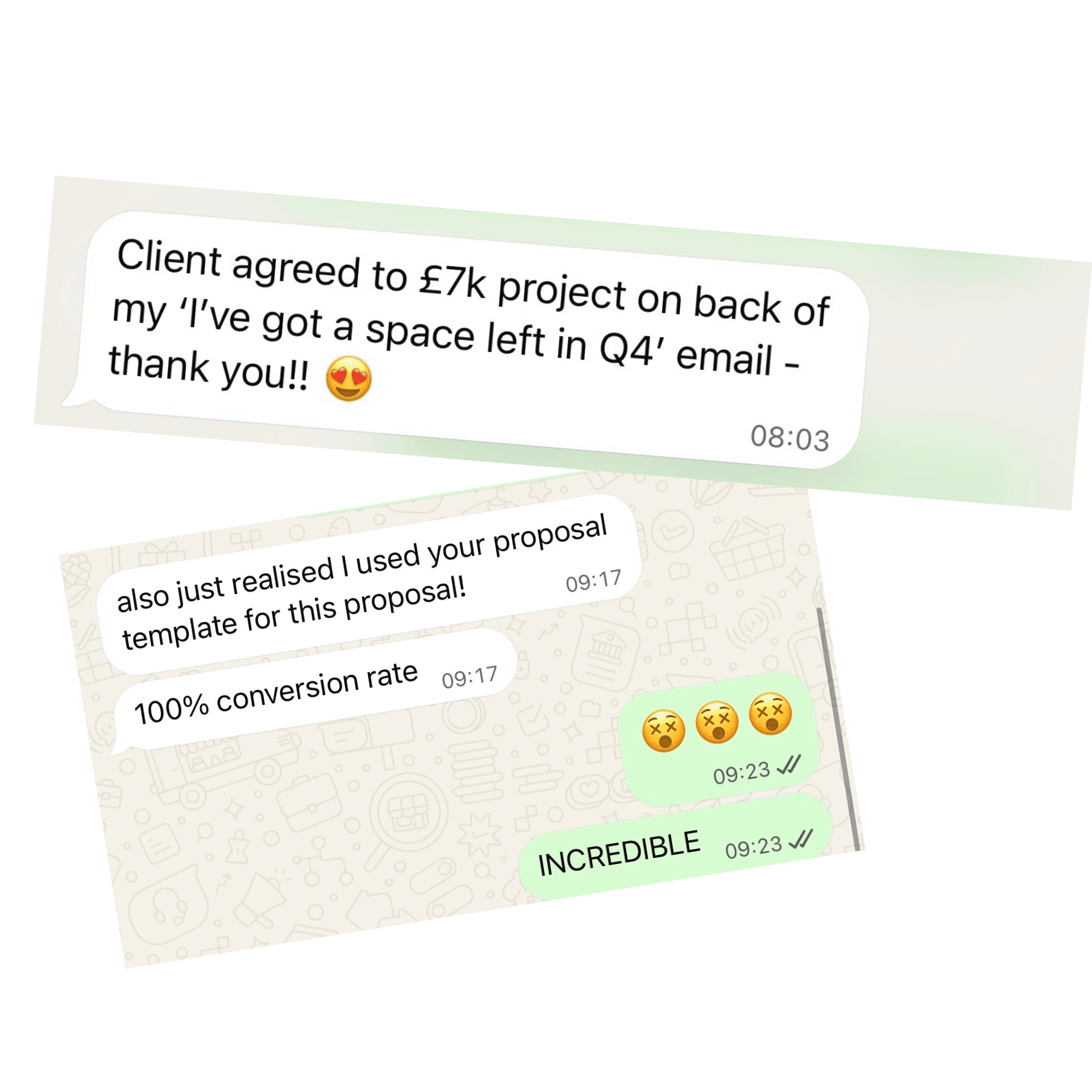
Nicola bought the High-Ticket Proposal Kit, used the template and went on to close £7,000 worth of business.
Which I was rather pleased to hear, obviously.
Now, I'm not suggesting you can buy a £197 kit and automatically make seven grand. They still had to find the client, have the conversation and sell their work.
But it's a pretty good example of someone taking the method I've used in my own business and putting it to work in theirs.
Not bad for a proposal template, is it?
You don't need a whole new sales process.
Use the Sales Call Notes Sheet to capture what's going on, what they want to change and the details that will matter when you're writing the proposal.
Work through the Method and the Cost of Staying Here Worksheet. Get clear on the problem, the recommendation and why it makes sense.
Open the Editable Template. Use the worked examples to see how to turn the information you've gathered into something specific.
Run through the Proposal Checklist and make sure your buyer can understand what you're proposing, why and what happens next. That's it.
You sell high-ticket services and usually have a proper conversation with someone before you send them a proposal.
You spend far too long writing proposals because every client wants something slightly different.
You've got a proposal template, but you're mostly changing the name, deliverables and price.
You have brilliant sales calls, send the proposal and then hear absolutely nothing.
Your proposals explain what you're going to do, but don't always make it obvious why the buyer should pay for it.
You know your work is worth the money, but find yourself having to justify the price once the proposal lands.
You want a proper way to put proposals together without starting from scratch every bloody time.
You sell products or services with fixed prices that people can buy without speaking to you.
You don't really do proposals. People either book or they don't.
You're looking for a template you can fill in without having to think about the person you're selling to.
You want something that will magically make everyone say yes, regardless of what you're selling or whether they actually need it.
You haven't got a service you're ready to sell yet. This kit is for turning real sales conversations into proposals, not working out what your offer should be.
No. There's a template in the kit, but there's also a method for working out what to put in it, worksheets to help you get the information you need, two examples showing how it works and a checklist for the finished proposal.
If you sell services where the work is shaped around the client's situation, it's designed for that kind of sale. You'll need to apply the method to your own offer and clients rather than copy an example word for word.
Keep it if you like it. The method, worksheets and examples can still help you improve what you're putting into your existing proposals.
No. It gives you the tools and examples to write it yourself. You still need to understand your buyer and make sensible recommendations. The kit helps you turn that thinking into a document.
It's designed to help you write clearer, more relevant proposals that explain the value of what you're selling. Whether someone buys will still depend on the work you're proposing, your price, the buyer's circumstances and plenty of other things. There isn't a template on earth that can guarantee a yes.
Buy the kit for £197 and all seven parts will be delivered to your inbox after checkout.
If someone's told you exactly what's going wrong in their business, what they want instead and why they're considering paying you to help, you have information that belongs in your proposal.
Use it.